How could it be that I felt well, even energized, most days, yet my blood markers were quietly decreasing? Some markers were outside of the normal ranges experts say they should be, yet I didn’t feel different. Some markers were simply edging their way closer to too high or too low. What constitutes being too far out of range? At what point would I be at risk of infection or complications? At what point might they postpone the weekly treatment, waiting for my bloodwork to improve? Ugh. The thought of delaying this odyssey at all makes my heart groan. I just wanted to move past this.
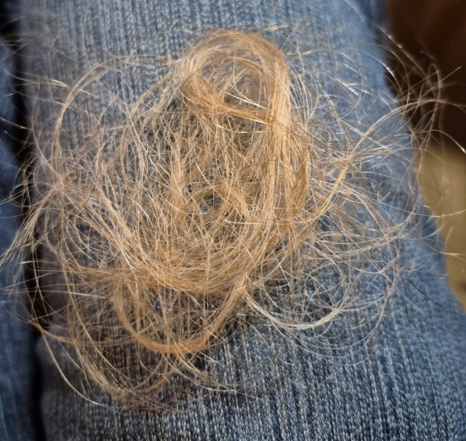
In addition to bloodwork changes, my very thick hair was shedding more than its normal pace. Or was it? Hard to tell since I had so much of it to begin with. Was I to focus on how much hair I threw away on shampoo days or how much was still attached?
Cancer treatment is not necessarily a straight line. It was more like jumping on a trampoline, not knowing exactly where I was going to land each time. In those moments, the Holy Spirit would prompt me to breathe deeply and remember the excerpt from the Serenity Prayer below:
“Living one day at a time; enjoying moment at a time; accepting hardships as the pathway to peace; taking, as Jesus did, this sinful world as it is, not as I would have it.”
My core treatment plan included some of everything from the standard-of-care (SOC) oncology menu. Surgery (lumpectomy). 12 weekly Chemo (Taxol) plus Herceptin infusions. Followed by 6 weeks of daily Radiation to my right breast and lymph nodes. 9 more months of Herceptin infusions. Cut. Poison. Burn. Then 5 years of Anastrazole to block hormones (thought to be drivers of my triple positive breast cancer).
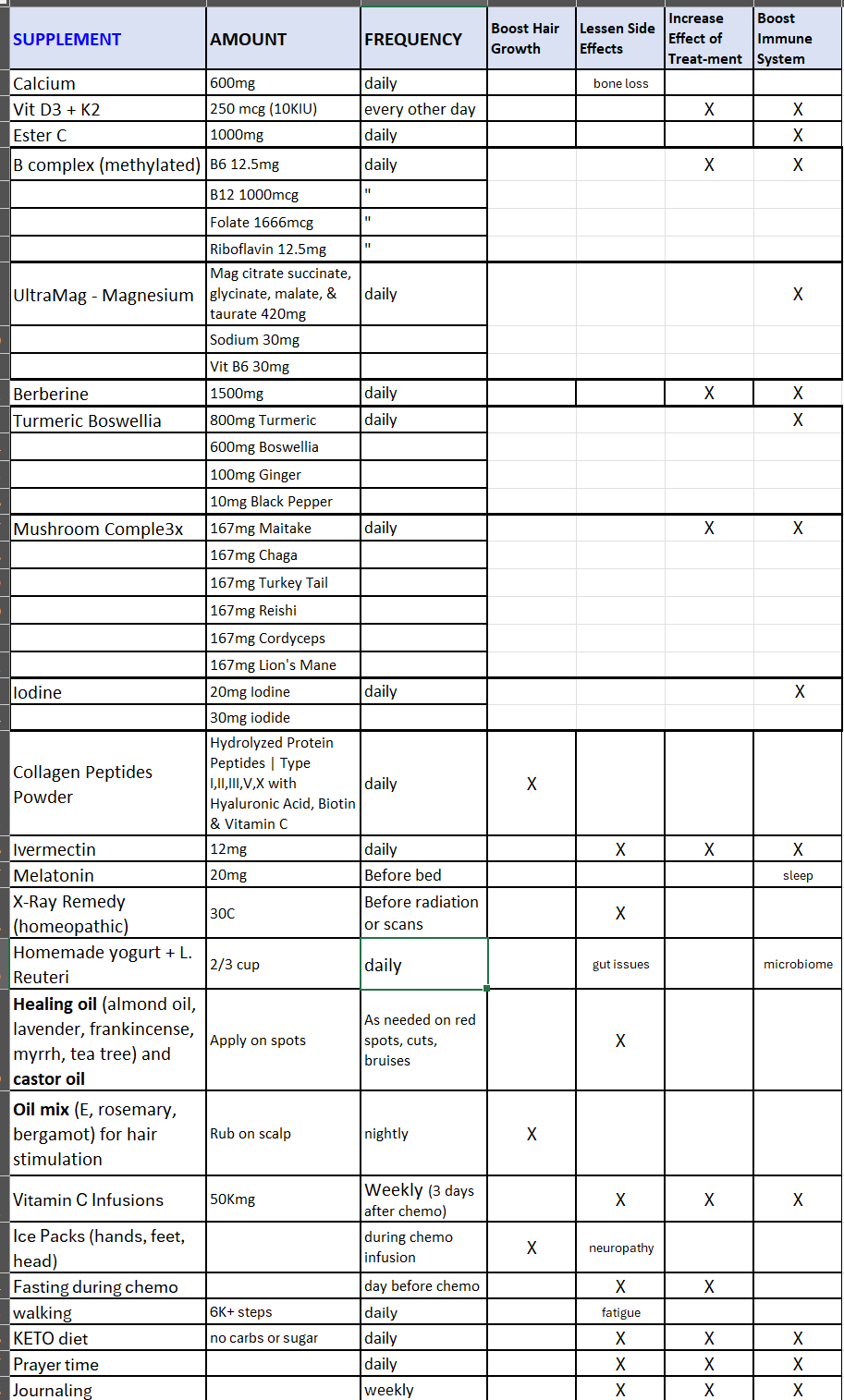
While I obeyed and endured the SOC treatment plan, I also (after much research) implemented the following complementary treatments and protocols during treatment. Complementary means alongside, not as a substitute. I became a student of this disease and all the available treatments. I read books and articles and studies. I spoke with survivors about their experience with treatment and these supplemental protocols. See hyperlinks at the bottom of this post for a small sampling of articles I found while researching these treatments.
The rest of week ONE chemotherapy went well, with normal appetite, no nausea, and only one nap. Three days after that first treatment, I woke up noticing multiple mosquito bites on my legs, ankles, and feet. There was no plausible explanation for mosquitoes bites, but I recall sleeping with my legs outside the covers to cool myself. The day before, I had joined my husband, during some yardwork – acting as his lovely assistant. But I wore thick jeans, socks and tennis shoes, so can’t imagine being bitten during that outing. And there were no bites on my uncovered arms. We concluded there must have been a ravenous army of mosquitoes in our room overnight. The next morning, as the day progressed, the itching intensified, even after trying “After Bite”, Tecnu, and hydrocortisone cream. By evening, I popped a Benadryl and tried to sleep with all my appendages covered up. By 3am, I was super hot from all the covers, itching like crazy again, so got up and slathered on more Tecnu and moved to the cooler living room couch and attempted to fall back asleep. By 5am I gave up, grabbed ice packs to apply to the large whelps, swallowed an Allegra with my coffee and attempted to read while settling into a less miserable existence.
While drinking coffee, I GOOGLED “chemo and mosquito bites” and I found several articles stating “reaction from mosquito bites can intensify while on chemotherapy” with the histamine response stronger and the body’s natural antihistamine response hindered. It even had a name – Skeeter Syndrome. Terrific. In addition to minding my gut microbiome, blood counts, immune system, and a multitude of potential side effects from cancer treatments, NOW I also needed to be mindful of the pervasive Texas summertime pest – the mosquito.
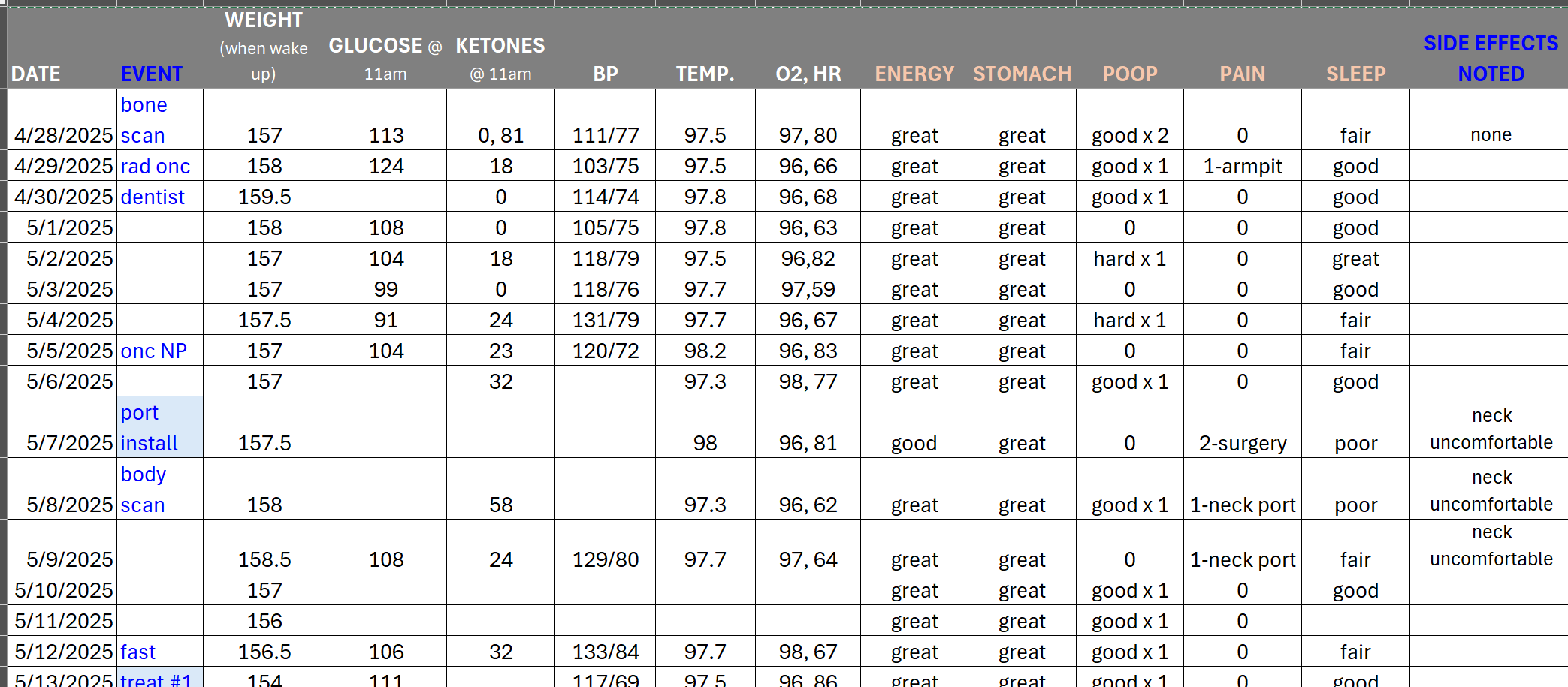
While all of this was transpiring, I noticed on my daily health measures chart (see chart below) which I began tracking before treatments, showed one glaring issue. On Thursday, I realized I hadn’t pooped since Tuesday. Having struggled with constipation occasionally, I’d been careful to over-hydrate. Perhaps I had not moved around quite enough, especially during the 5-hour treatment day. I ticked through the list of everything I did each day to care for my digestive system (water, magnesium, yogurt, chia seeds, and berries). By the next day, I threw everything I knew at this new problem (liquid magnesium, more movement, large dose of Miralax). Then it occurred to me that I had started taking Slippery Elm on Sunday before my first chemo, preventatively to stave off potential nausea side effects (effects I wasn’t certain I would experience). Hrmmm. I GOOGLED again and one of the main side effects of Slippery Elm is…constipation. Ugh. Must. Research. Supplements. Better. I happily report that I finally pooped. Lesson Learned: while Slippery Elm might prove useful for some people, I’ll move it into the basket of “as needed” treatments should nausea become a problem.
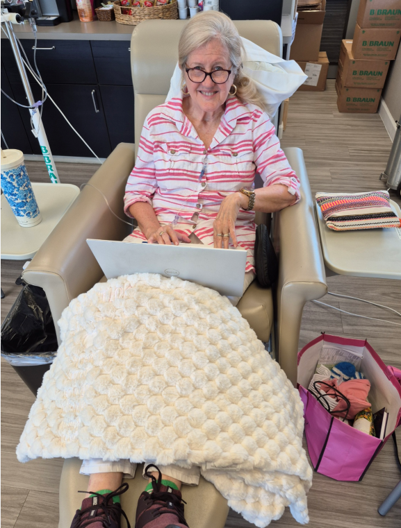
We arrived that Tuesday with multiple bags in tow, looking like we were moving into the oncologist’s treatment room. A big, shiny, pink bag held:
Fuzzy blanket gifted to me by Team Carol (College Station girlfriends and my frontline prayer warriors)
Pashmina, in case I needed a shawl to keep warm. Although it was summertime, the treatment room was cold!
Blank notebook and pen (to take notes on my experience, note tips for future sessions)
Laptop, charger block, headphones in case I was inclined to get online during the 3-4 hour treatment
Miscellaneous small bag (containing lip balm, healing oil, xylitol gum, reading glasses, hair tie)
Metal glass filled with lemon water
And then a small cooler containing:
Snacks (ham, boiled eggs, peanut butter and spoon)
Ice gloves and socks and hat (more on that later)
Frozen pads to keep ice gloves, socks, hat cold
Refill for my filtered water from home
First stop was drawing blood and running labs for the week – using my newly installed port for the first time! The port made this process (repeated weekly) very fast, painless, and easy on my vascular system. After that, we waited for lab results and then to see the medical oncologist prior to first treatment. He had no concerns with my bloodwork and so we were ready to get this party started.
Once I settled into one of the eight comfy recliners, the nurse tech measured my blood pressure and offered a warm blanket. The blanket was a sweet offer, but I opted for my fuzzy, plush blanket with “Team Carol” embroidered on it in pink. Next, NP injected an antihistamine and antacid into my port (to lessened potential side effects), then a steroid (dexamethosone, to also stave off allergic reactions and potential nausea). Next up was connecting the Herceptin immunotherapy for 90 minutes of slow drip, followed by another 90 minutes of Taxol (chemo) slow drip. In total, we were there from 9am to about 2pm. The nurses estimated that future weekly treatments wouldn’t take 5 hours due to no doctor visit and slightly faster drip.
My active imagination kept me on high alert the next 24 hours as I kept waiting for the other “shoe to drop” all day and into the night. But, praise God, no adverse side effects came. My appetite was normal and energy was surprisingly robust. Same the next day. The only noticeable change was that my arthritic ankles (due to a history of 5 surgeries) seemed to hurt LESS. Hmmm. Could it be the steroids they shot into me?
But Jesus beheld them, and said unto them, With men this is impossible; but with God all things are possible. Matthew 19:26
After much research about fasting and how it enhances chemo effectiveness, my husband and I chose to make it part of our weekly routine. The day before each chemo session, we would water fast for a day (which technically turned into a 34 hour fast each week).
My loving husband joined me in this weekly fast — in tangible support of this health trek. It honestly helped me managed through a few hunger pangs to have someone in the house also making the same choices (to not eat). Each week the fast became easier and oddly welcomed as we experienced a unexpected residual energy from fasting. And when the hunger was almost unbearable, we found drinking carbonated water took the edge off of the pangs.
In an attempt to control part of this expedition, I packed a chemo bag to bring with me each week to treatment. It included luxurious fuzzy blanket (the treatment room was always cold), hand lotion, lip balm, tumbler of water with lemon, book, earbuds (in case I wanted to listen to something on my cellphone), ice gloves/ice socks/ice cap (see next post), chewing gum, and a small bag of Ketogenic snacks (usually ham slices, cheese, strawberries). I was warned I’d be there for 4+ hours.
As for nervous energy, I did small projects around the house to keep myself busy. I could tell that my husband was also burning nervous energy since he rebuilt a paint sprayer motor three times in one day. They all warned of nausea, but I knew that rarely experienced upset stomach (my entire life). But still, I froze ginger and lemon ice cubes just in case I need quick ginger tea to calm nausea. I picked out my comfy clothes that I’d wear for the long oncologist visit. I read and re-read bible verses throughout the day that friends had sent to me. I even shampooed my hair knowing that it may or may not fall out in weeks to come.
Do not be anxious about anything, but in every situation, by prayer and petition, with thanksgiving, present your requests to God. Philippians 4:6–7
I sought the Lord, and he answered me; he delivered me from all my fears. Psalm 34:4
Although my chemotherapy treatments were scheduled to occur first, followed by radiation sessions, You often discuss radiation options with the radiation oncologist early. He attempted to postpone our meeting until all chemo treatments were finished, yet we wanted to hear his perspective on treatment protocol. That way we could mull and study the proposal and prepare more questions before radiation started. The doctor compromised by conducting a telehealth session with us to share his thoughts base on my pathology, surgery, and other tests.
His suggested plan included 6 weeks of daily Monday-Friday targeted radiation of my right breast and armpit. They would be short sessions (5 minutes long), with most of my time spent in a car getting to their location from our house. It would be a long drive (one hour each way) for a few minutes of treatment. Every day – Monday through Friday. I’m glad I drive a hybrid that gets 30+ MPG. At least the treatment itself was not supposed to be painful, with burning sensation showing up in the last few weeks.
We asked why BOTH chemo and radiation are necessary. The radiation oncologist explained that chemo targets the entire body through the bloodstream whereas radiation targets a specific area, He shared that chemo before radiation would make cancer cells more susceptible to radiation damage. Plus, radiation would be more effective at controlling and preventing local cancer recurrence when combined with chemotherapy. He also shared that studies have shown that protocols combining chemotherapy and radiation could lead to better survival outcomes for certain types of cancer. Lots of “coulds”, “shoulds”, and other qualifiers in that conversation. Enough to offer spots of hope, while offering no guarantees.
Radiation will be mostly painless and they have creams to lessen the effects of radiation burn that can build up by the final weeks of treatment. And so it continues…Cut – Poison – Burn.
Prior to embarking on the next few months of treatments destined to attack my body as well as the cancer they are intended for, I chose to undergo a little maintenance. This way my body will be in the best condition possible for the assault.
Ears – For months my left ear felt like it was clogged or had water trapped inside. A quick inspection by my ENT revealed that I possessed an over-abundance of ear wax. Truth be told, I’ve never in my life had my ears professionally cleaned and the result was amazing. I could hear out of that side of my head again.
Teeth – It was time for my every 6 month teeth cleaning. I typically have strong, healthy teeth so I didn’t expect any issues. My reliable teeth came through and I received a virtual gold star for dental hygiene, enamel, and gums. Additionally, it was good to inform my dentist about my diagnosis and upcoming cancer treatments.
Heart – Part of the oncologist’s protocol included having my heart tested (echocardiogram), to be repeated every 3-4 months to note any changes due to chemo, Herceptin, or radiation. My baseline readings proved normal to the whole medical team.
Nails – Did you know that fingernails and toenails showcase a person’s health? Therefore, in the spirit of transparency, I removed all the gel polish from fingers and toes. That way I could see exactly what was changing (or not) with my health. Since chemo and radiation can also dry nails and cuticles, I started applying oils to avoid cracks and painful cuticles. Castor Oil. Frankincense & Myrrh oil.
Skin – At the beginning of my lifestyle clean-up, I updated dozens of products that I put ON and IN my body. A site called EWG.org helped identify carcinogen-free products (body soap, shampoo, conditioner, toothpaste, face cream, makeup, detergents, etc). Just like when we began our Ketogenic eating habits and gave away a sizeable portion of our pantry (rice, wheat, corn, beans, pasta, potatoes, sugar, canola oil), I modified the contents of my bathroom cabinets, shower caddy, makeup drawer, and laundry room. It felt empowering to make these changes.
Hair – Ever since I was 30, I’ve colored my hair to align with my original God-given hair color – honey blond. I don’t know what quirk of nature turned my youthful blond hair to dirty-dishwater-blond as I exited my teens, but my skin-color popped when I went lighter. The week following my diagnosis, I found an ammonia-free, healthier hair dye (NaturTint) that I started using immediately. But since my planned cancer treatments included the possible side-effect of hair loss, I decided not to color my roots for a few months. No reason to stress my hair while it was struggling to survive. If my hair my hair managed to survive in-tact, I could live with grown-out roots.
God-given, healthy fear protects us from harm. God-distracting, unhealthy fear steals our joy.
For God has not given us a spirit of fear; but of power, and of love, and of a sound mind. 2 Timothy 1:7
My husband and I flooded our brains with information. Books, experience from cancer-survivors, YouTube, Google (yes, Google). Daily more cancer books arrived with each Amazon truck pulling into our driveway. It was our way of processing this episode of our life.
We weighed each book against the other. Versus YouTube videos from cancer-focused MD’s and PhD’s. Versus actual results of friends who survived treatment for various cancers. We considered the research sources (reputable, recent, tested, showing a similar pattern of effective results). I found great comfort “interviewing” ladies who specifically had survived breast cancer and gleaning their wisdom.
My brain allowed for differences in cancer type, exact diagnosis, stage, age, how recently they were treated, and other factors that presented a variable. But I also found that there were commonalities amongst all cancers.
It’s rare that doctors know exactly what caused the cancer. Of course you can suspect obvious cancer-causing lifestyle choices like smoking, unhealthy diet, a career touching and breathing known carcinogens; and a small percent with a known genetic disposition. But after that, I felt like a detective digging through trash cans of what-ifs.
Was my water not filtered enough?
Did the non-stick pans and plastic spatulas leech foreign materials into my food?
Did I consume microplastics by cutting on plastic cutting boards and drinking from plastics bottles?
Cells have mutated to rapidly divide and spread. Also, cancer do not die in the same lifecycle as normal cells.
Typical treatment protocol recommends surgery, radiation, and sometimes chemotherapy. And there are many cocktails of chemo drugs (who knew?).
Rarely are diet changes, supplement support, or complementary treatments recommended by the oncologists. Although there are boatloads of examples where those complementary treatments make traditional treatments more effective as well as more easily tolerated by the person with cancer, those complementary treatments are not part of the medical community’s standard of care. So, doctors shy away from mentioning them. That doesn’t mean you shouldn’t use all available resources to research and implement complementary treatments.
The variations come from the following:
Where (which organ) cancer is,
how big the mass of cancer cells is,
how aggressive is the growth of those cancer cells,
has it spread (or is it contained to one area),
are there special receptors involved (HER2, estrogen, progesterone, etc)?
Can surgeons operate to remove the mutant cells? Do you want them to operate (and how much)?
How effective is the standard cut-burn-poison protocol for your type cancer (i.e., chance of survival)?
While I fully trusted God to keep my mind, heart, emotions, and soul at peace no matter what future all this brought into my life, He also expects me to use the skills and the brain He’s gifted me with to discern options and a path forward. Next steps, right?
“God is in control, but he doesn’t expect you to lean on your shovel and pray for a hole.” Unknown
“Duty [obedience] is ours, results are God’s.” John Quincy Adams
My breast specialist surgeon called on Friday morning, 4/11, a couple of days after a successful lumpectomy. She was all business. The air going into my lungs suddenly felt thick and I managed to swallow the lump in my throat. Although she had estimated pathology results to come a week after surgery, she received them a mere 2 days post-surgery. Good news: the margins were negative for the golfball-sized mass they removed. Negative margins are what we hope for;. It means she removed sufficient flesh to know they got all the cancerous cells. Not-such-good-news: the sentinel node biopsy — dye runs from the mass to see which lymph nodes are fed by the mass. Protocol is to remove those nodes that show the dye. Two of my lymph nodes showed dye from the cancer mass so she removed them during surgery. The concerning part of the pathology showed micrometastases in those two nodes. That means cancer spread. Although they were tiny (micro) cells, cancer had still spread. Still my cancer was rated as stage 1.
The presence of micrometastases influenced the course of my treatments. The surgeon indicated that I likely would receive a bit of everything from the oncology menu, instead of avoiding either chemo or radiation. I went into surgery thinking they’d remove everything, there would be no lymph spread, radiation would be minimal, then on to blocking the HER2 cells. Now the radiation may be more extensive, and chemo a likely part of the plan. And I’m not sure how they discern whether these micrometastases have spread beyond the lymph nodes since a few individual cancer cells aren’t visible on MRI or sonogram. Thankfully, according to pathology, the few cancer cells had reached those two removed lymph nodes, but gone no further.
So much to process. More appointments coming. Breathe. Am I going to die? Not today.
“Don’t waste moments in fear of things that fear can’t change.” Unknown
I chose faith. The alternative stinks. Choosing faith is practical as it brings a level of peace as you slog your way forward.
“Do not be anxious about anything, but in every situation, by prayer and petition, with thanksgiving, present your requests to God.” Philippians 4:6 NIV
While I was becoming a student of cancer and all its treatments, my mind seemed to be bound by the central question, “why?” and “What did I do wrong?”. My brain was the tether-ball tied to the pole of “why did I get cancer?”. I’ve heard that just before you die, you see glimpses of all the wonderful snippets of your life – a life recap of sorts. But as I mull this diagnosis with all its possible future ramifications, the slow-motion newsreel takes on a different theme. Every. Thing. That. I. Have. Ever. Done. Wrong.
Did I smoke, do drugs, drink to excess? No. No. No.
Is my diet terrible? No – especially for the prior 1.5 yrs it’s even been terrific (ketogenic – with no starches, no sugar, only meat, dairy, and non-starchy vegetables).
Do I have family history of breast cancer? – No, going back 3 generations.
Now to the hard part of the self-reflection.
Did I ever exercise enough? NO. Did I have a sedentary job most of my career? YES.
Did I eat processed food for much of my life (prior to the KETO diet)? YES.
Have I made poor choices in my life? YES.
The devil specifically leaned in on all those poor choices, hinting that perhaps my cancer was penance for those moments. What a jerk he is. I have long-ago reconciled those poor choices with God, repented and lead a new life.
Books like Cancer As A Metabolic Disease (which is a great book) can also fan the flame of past lifestyle environmental behaviors, like exposure to micro-plastics, fumes inhaled, chemical exposure, carcinogenic makeup/soap/lotion ingredients, and other environmental causes. Was I perfect? No. Was I the worst? No.
Then there’s the HRT (hormone replacement therapy), prescribed by my gynocologist after my full hysterectomy. Some studies show a link between HRT and breast cancer. And my cancer is hormone (estrogen and progesterone) positive.
And lastly, some studies show a link between women who don’t give birth or breast feed and breast cancer. That’s me.
Pause. Breathe. Time to focus on how do I resolve this medical issue? Not wallow in “what did I do wrong?”.
“When you know better, do better.” Maya Angelou
“There is no condemnation for those who are in Christ Jesus.” Romans 8:1
“What time I am afraid, I will trust in thee.” Psalm 56:3