My Next Steps

Thriving during adversity

Learning to WAIT (5/20/2025) September 28, 2026

As a planner and organizer, I understood that this journey would be challenging on many levels. Learning to wait is an essential skill for surviving the odyssey of cancer and the lengthy treatments. Breathing deep, long yoga breaths through the days, weeks, and months help to diffuse the unknown. Like, waiting for appointments and surgery schedules; for approvals from insurance; for referrals; for pathology and test results; for answers to questions posed via myriad medical portals; for too many days until the next step; for the end of our weekly 24-hour fast; for weekly blood-marker results; for the next oddity that my body would serve up (read earlier post on “skeeter syndrome”). And for the metaphorical “other shoe to drop” as I await side effects that may never arrive.

The waiting is not necessarily about worrying. Being in the midst of waiting can mean wanting to be closer to completing this chapter in my life. But this was another season that reminded me that each chapter is meant to be lived fully. Breathe and move on. Pause and then get back to it. If you ruminate about the waiting, it will be like chasing some unseen, lumbering creature you’ll never quite catch.

So how did I get through these waiting moments? I attended meetings and events all the while being mindful of not exposing myself to possible sources of germs and infection. I read – as a long as wasn’t another cancer book. Don’t misunderstand – I’m an avid researcher and knowledge-gatherer. Yet at some point the learnings need to stew and marinate without more ingredients added. Gardened during spurts of energy. Cleaned and organized – that list of projects was as long as our half-mile driveway. Short-term projects were great – ones that wouldn’t be interrupted by the next appointment, stalled energy, or fatigue that wrestled me onto the couch.

One of my favorite ways to use this waiting time was to write notes to others. Birthday, greeting cards (I know, how old-school of me), or thank you notes. I was grateful for so many people who had reached out to me and wanted to make sure they knew how much their gesture meant to me. Besides, people still enjoy receiving something in the mailbox other than junkmail. Bringing the needs of other people into the foreground was the best method for moving my “waiting” into the background. Call about a special post on social media. Ask about their family and job. Write an uplifting note to someone who’s grieving. Make a quick call to bring laughter into someone’s day.

Create in me a clean heart, oh God; and renew a right spirit within me.   Psalm 51: 10


Complementary Cancer Treatments (May 2026)

My core treatment plan included some of everything from the standard-of-care (SOC) oncology menu. Surgery (lumpectomy). 12 weekly Chemo (Taxol) plus Herceptin infusions. Followed by 6 weeks of daily Radiation to my right breast and lymph nodes. 9 more months of Herceptin infusions. Cut. Poison. Burn. Then 5 years of Anastrazole to block hormones (thought to be drivers of my triple positive breast cancer).

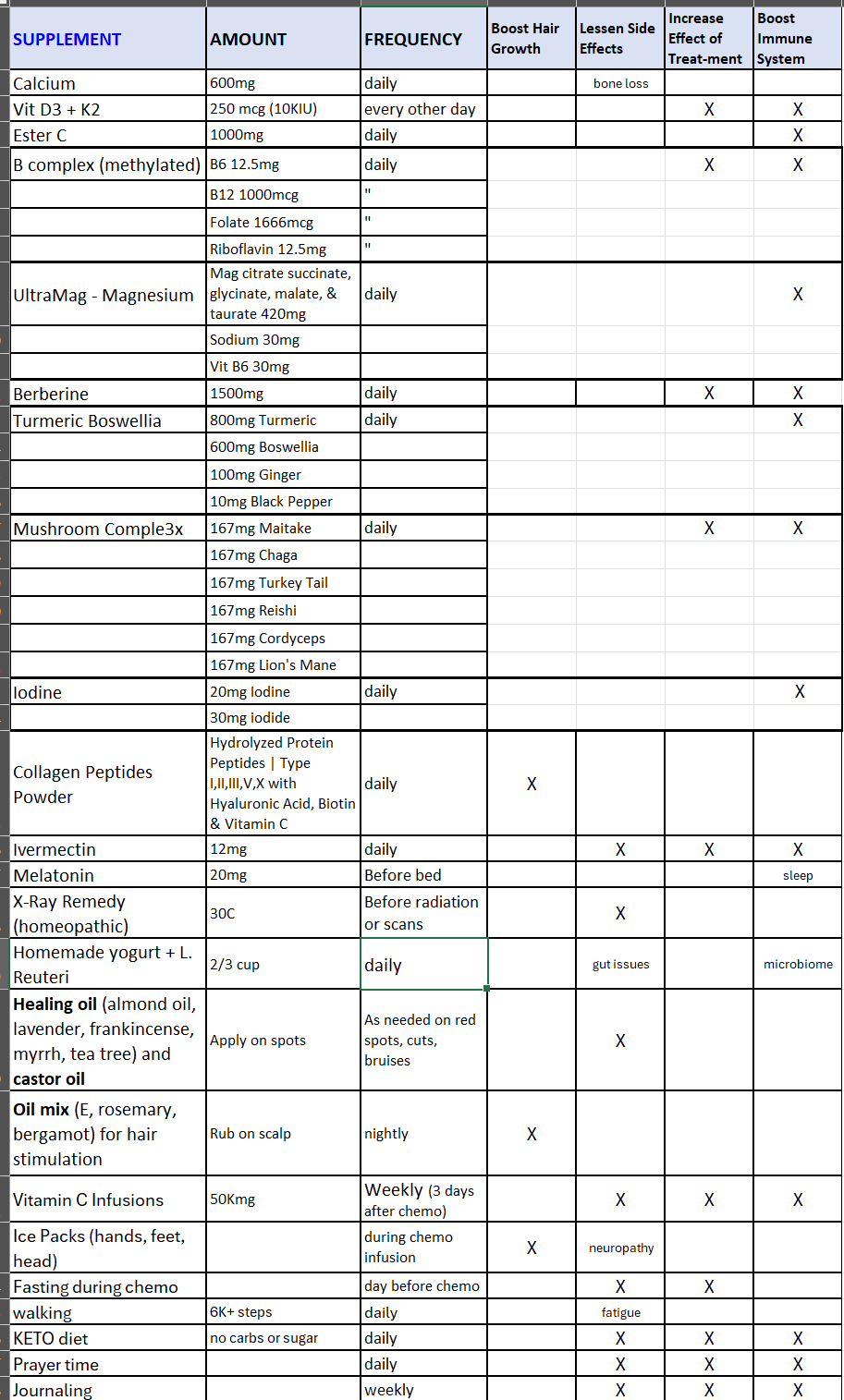
While I obeyed and endured the SOC treatment plan, I also (after much research) implemented the following complementary treatments and protocols during treatment. Complementary means alongside, not as a substitute. I became a student of this disease and all the available treatments. I read books and articles and studies. I spoke with survivors about their experience with treatment and these supplemental protocols. See hyperlinks at the bottom of this post for a small sampling of articles I found while researching these treatments.

  • Eating:
    • Ketogenic eating regimen (fat, protein, dairy, non-starchy vegetables, water, tea)
    • Filtered water (Birkey drip system to remove chlorine and other harmful ingredients)
    • Homemade yogurt and L. Reuteri (to maintain a healthy gut microbiome), taken daily
  • Fasting the day before treatment (to improve treatment effectiveness and reduce treatment side-effects)
  • Ice gloves, socks, hat during chemo infusions to prevent neuropathy and hair loss
  • Supplements to support my immune system and promote autophagy (see chart below of what I took).
  • Vitamin C IV infusions (50Kmg) to help shed dead cells after apoptosis (cell death), weekly
  • Changed soaps, lotion, makeup to those with non-carcinogenic ingredients
  • Transitioned to wooden cutting boards and silicone or stainless steel utensils, plus glass food storage – to avoid micro-plastics
  • Healing oil applied before bed to keep cuticles from drying out
  • Vicks VapoRub inside nostrils to prevent drying and runny nose
  • Ginger tea (as needed for treatment of nausea; pre-make ice cubes with fresh grated ginger root + lemon juice to drop into hot water
  • Floss + water pik + Xylitol toothpaste to maintain mouth health and reduce the chance of cavities and mouth sores due to dry mouth
  • Xray 30c Remedy – before and after any scans (Xray, CT, dental). To help prevent radiation damage
  • Scripture journal to sustain my faith and strengthen my relationship with God.

A small selection of the many articles I read on the following complementary treatments:

Ketogenic Diet (KD) and cancer treatment

High-dose vitamin C infusions

Cancer treatments and fasting. Also here. And here.

Iodine and cancer. Also here.

Ice packs.

Ivermectin.


Skeeter Syndrome & Slippery Elm (5/16/2025)

Filed under: Maintain Health & Sanity — cstatenclark @ 11:27 am
Tags: , , , , , ,

The rest of week ONE chemotherapy went well, with normal appetite, no nausea, and only one nap. Three days after that first treatment, I woke up noticing multiple mosquito bites on my legs, ankles, and feet. There was no plausible explanation for mosquitoes bites, but I recall sleeping with my legs outside the covers to cool myself. The day before, I had joined my husband, during some yardwork – acting as his lovely assistant. But I wore thick jeans, socks and tennis shoes, so can’t imagine being bitten during that outing. And there were no bites on my uncovered arms. We concluded there must have been a ravenous army of mosquitoes in our room overnight. The next morning, as the day progressed, the itching intensified, even after trying “After Bite”, Tecnu, and hydrocortisone cream. By evening, I popped a Benadryl and tried to sleep with all my appendages covered up. By 3am, I was super hot from all the covers, itching like crazy again, so got up and slathered on more Tecnu and moved to the cooler living room couch and attempted to fall back asleep. By 5am I gave up, grabbed ice packs to apply to the large whelps, swallowed an Allegra with my coffee and attempted to read while settling into a less miserable existence.

While drinking coffee, I GOOGLED “chemo and mosquito bites” and I found several articles stating “reaction from mosquito bites can intensify while on chemotherapy” with the histamine response stronger and the body’s natural antihistamine response hindered. It even had a name – Skeeter Syndrome. Terrific. In addition to minding my gut microbiome, blood counts, immune system, and a multitude of potential side effects from cancer treatments, NOW I also needed to be mindful of the pervasive Texas summertime pest – the mosquito.

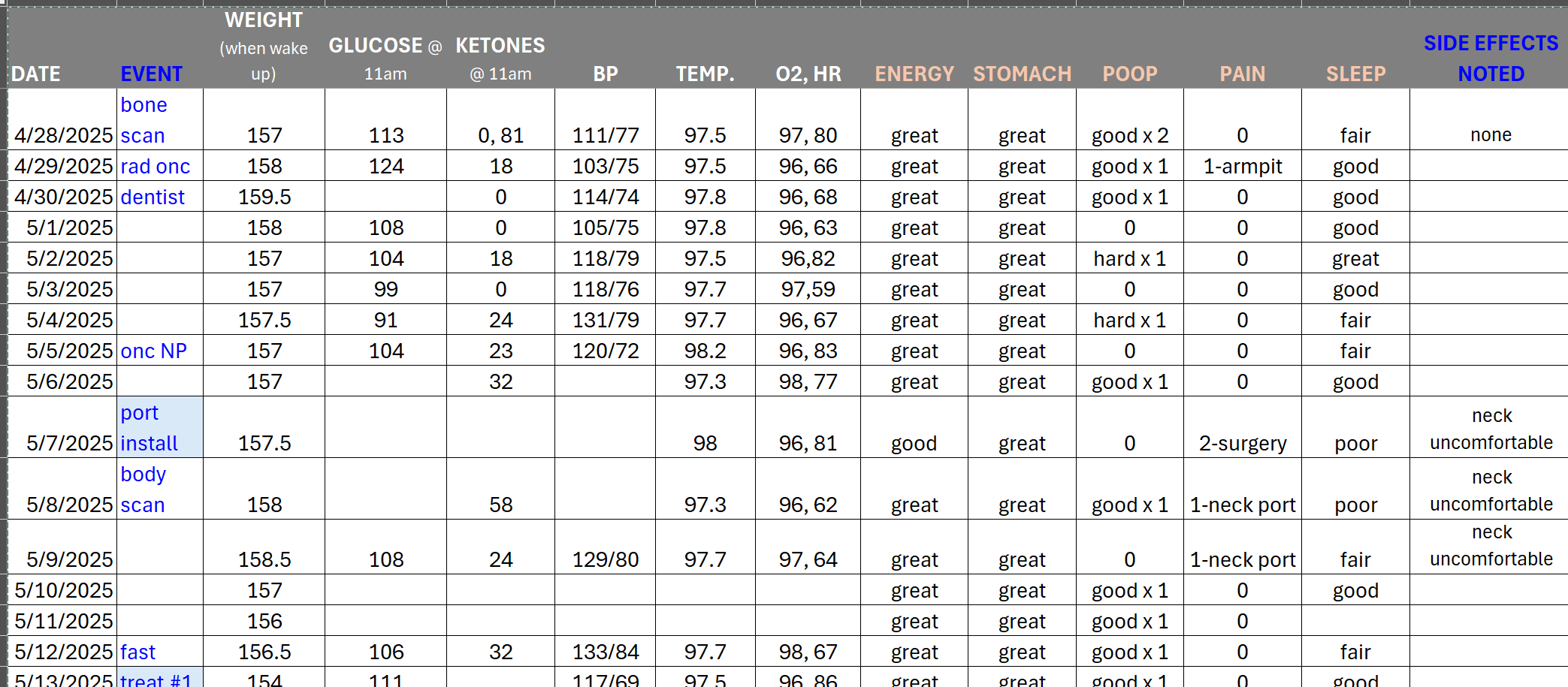
While all of this was transpiring, I noticed on my daily health measures chart (see chart below) which I began tracking before treatments, showed one glaring issue. On Thursday, I realized I hadn’t pooped since Tuesday. Having struggled with constipation occasionally, I’d been careful to over-hydrate. Perhaps I had not moved around quite enough, especially during the 5-hour treatment day. I ticked through the list of everything I did each day to care for my digestive system (water, magnesium, yogurt, chia seeds, and berries). By the next day, I threw everything I knew at this new problem (liquid magnesium, more movement, large dose of Miralax). Then it occurred to me that I had started taking Slippery Elm on Sunday before my first chemo, preventatively to stave off potential nausea side effects (effects I wasn’t certain I would experience). Hrmmm. I GOOGLED again and one of the main side effects of Slippery Elm is…constipation. Ugh. Must. Research. Supplements. Better. I happily report that I finally pooped. Lesson Learned: while Slippery Elm might prove useful for some people, I’ll move it into the basket of “as needed” treatments should nausea become a problem.