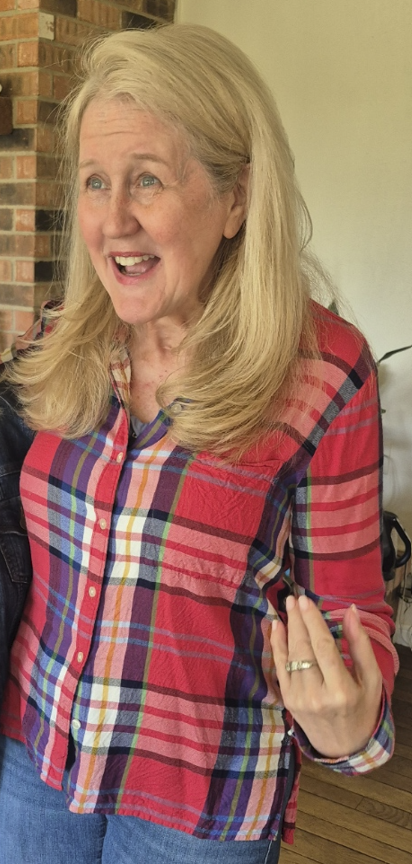
My Next Steps

Thriving during adversity

Prayer Warriors (3/28/2025) June 30, 2026

Filed under: First Things First — cstatenclark @ 5:13 pm

When this cancer diagnosis quietly crept into my life February of 2025, my 50th high school reunion was about to take place. It was poised to be a BIG event, perhaps not in number of attendees, but in significant reconnections after five decades of living disparate lives. Two other classmates and I had been working on and organizing the weekend for the prior 9 months when I received the diagnosis. There were still so many event details to lock down including venue, food, parking, music, memorial slide show, school tour, decorations, door prizes, and photography – oh and collecting payments from 96 attendees. Then in waltzes cancer.

The reunion weekend (3/28-29) was actually a welcome distraction from medical uncertainties looming ahead in the next few months. I got to be “Carol without cancer” for a few hours. Laugh. Hug. Tell stories. Remember our younger selves.

On Friday before the official reunion events kicked off, a cluster of our closest childhood girlfriends gathered for lunch to reconnect in a small setting. It was a time of deeper sharing than would be possible during the large group events. One of the girlfriends surprised me by presenting Team Carol t-shirts to each of us. The design had the pink breast cancer ribbon incorporated. What a touching moment and I was humbled to tears by the gesture. I wept. Not from fear, but because I was overwhelmed by feelings of gratitude for these special ladies and our bonds that had lasted across 50+ years. I’m truly blessed to have these prayer sisters. We posed for a group photo as they pledged to hold me in prayer through each step of this odyssey.

Prayer warriors geared up from other walks of my life as well — our church, my brother’s church, neighbors, churches we’d attended in the past, work friends, and of course family. I never felt alone in this journey, especially with the Holy Spirit leading the way and guiding my steps. I read so many medical books those first few months, but also devoured devotional books that kept pointing me back to the most reliable source of strength and hope – my heavenly Father. Yahweh. Abba. The Holy Trinity.

A terrific devotional book called 50 Days Of Hope came from one of my prayer sisters. It walks through so many of the questions and doubts and a foundation for facing each fear. If you want to check it out, the Amazon link is here. It was so uplifting to me during those first couple of months that I’ve recommended it to several friends since.


Adjusting Daily Activities – face, cooking, teeth, body (3/17/2025) June 29, 2026

Filed under: First Things First — cstatenclark @ 2:25 pm
Tags: , , , , , ,

As part of this new reality of treating cancer, I researched cancer-causing substances and exposures in my everyday life. Some common carcinogens are not ones I’m exposed to: tobacco, alcohol, radiation in excess, chemicals (heavy metals, asbestos, production environments, etc), tanning beds or excess UV rays. Something that made the list that have been part of my history are birth control pills and hormone replacement therapy (more on that in another post).

So I looked at the less obvious carcinogens and began to update dozens of products that I put ON and IN my body. A site called EWG.org helped identify carcinogen-free products (body soap, shampoo, conditioner, toothpaste, face cream, makeup, detergents, etc). Similar to when we began our Ketogenic eating habits and cleaned out a huge portion of our pantry (rice, wheat, corn, beans, pasta, potatoes, sugars, canola oil), I modified the contents of my kitchen and bathroom cabinets, shower caddy, and laundry room.

In the spirit of cutting out microplastics, our kitchen took on a new set of rules. We removed old non-stick pans and substituted both stainless or ceramic pans. We used cast iron for a bit, but found them harder to clean/care for. We swapped out all plastic left-over food containers for glass or stainless ones. Then replaced plastic utensils with wooden or stainless. Tossed the plastic cutting boards (ones we thought were so much more hygienic than wooden ones) and reverted back to wood boards. Here’s how to clean them properly.

In the bathroom, I confirmed that the Castille soap I used for showering is healthy, and I’ve always been careful about facial soap due to my sensitive skin. For soaps and lotions, think paraben-free and phthalate-free and typically without fragrance. Soaps using coconut oil, chamomile, avocado work well.

As for my shampoo and conditioner, I searched EWG.org again — always look for sulfate-free, silicone-free, and paraben-free. For body lotion, I like Medline Remedy. My make-up drawer got a hefty make-over (pun-intended) with even my Laura Geller foundation going in the trash (just because something is expensive doesn’t mean it’s healthy). I like the products from Well People and avoid products with silica in them.

Conventional wisdom always tells us all to stay sufficiently hydrated and I do that by carrying a lidded, metal insulated glass with me everywhere. Adding a slice of lemon helps make me thirsty for more water. And staying hydrated during this 12-month trek was crucial since my body would be battling so many treatment chemicals. So, another big change was to dig out our Berkey drip water filter system and use that water for everything (drinking, coffee, cooking, dog’s water, etc). The water from our faucets wreak of chlorine. We stopped using the Berkey a couple of years ago because we thought it was a pain in the neck to refill it multiple times a day – and the drip system is fairly slow. Our filter has double filters but still leaves some important minerals in tact. We love it! Another option is a Reverse Osmosis system. Those are great, but remove all the minerals, too…and might be cost-prohibitive for some people.


Medical Oncologist – Solidifying the plan (3/10/2025) June 27, 2026

Filed under: First Things First — cstatenclark @ 2:45 pm

I never knew there were so many types of oncologists. Surgical Oncologist (removes cancerous growths). Radiation Oncologist (oversees any radiation treatment prescribed). Medical Oncologist (lays out the overall plan for treatment, administers treatment drugs, and is the overall quarterback of the oncology team).

My medical oncologist also reviewed the pathology report with me — the report that I’ve scoured and reviewed and Googled dozens of times already.  I took notes, but the main words he used to describe likely post-surgery treatments were “radiation”, “Herceptin”, “maybe some chemo”, and “anastrozole”. O wrote all those down for further study. I asked about possible immunotherapy treatment (which tends to be milder on the body) and learned that wasn’t an option for me due to the HER2 + cells present in my cancer. His plan all seemed like a cookie-cutter recipe following the cut-burn-poison protocol. The intent was to give me the best odds of survival. Survival. Breathe deeply.

Shortly after this appointment I chose to also start a complementary regimen of Ivermectin and Fenbezadole daily. In studies, (see Journal of Orthomolecular Medicine, June 17, 2024 edition, volume 39, number 3) both have shown to be effective in boosting the body’s immune system and increasing the effectiveness of traditional treatments. Oncologists are not big fans of this supplement since it’s not “standard of care”, but lack of negative side effects and many studies showing evidence of their usefulness convinced me to add them to my daily supplements.

I also spoke with several friends about the benefits of Vitamin C infusions. Although not covered by insurance, I was convinced that I should add it to my weekly protocol during chemo and radiation. More on that later.


Initial appointment to formulate treatment (3/3/2025)

Filed under: First Things First — cstatenclark @ 1:48 pm

Per the biopsy three weeks prior, I already knew the mass was small and that all indications said no lymph node involvement. The surgeon added more details I hadn’t seen on the original pathology report. My cancer is Estrogen positive. Progesterone positive. HER2 positive. It’s called triple positive breast cancer. HER2+ is an aggressive form of cancer. Thankfully HER2+ has specific drugs that target those over-active HER2 cells — Herceptin is one of those drugs. My surgeon also estimated the Stage at stage1, although confirmation of stage comes after surgery and subsequent pathology.

Since the size of my cancer mass was small, she (my surgeon) gave me the surgical choice of mastectomy + zero radiation or lumpectomy + radiation. I had to think this one over. If during surgery they discovered ANY lymph node involvement while performing the sentinel node biopsy, then radiation would still be recommended – even if I chose to have a mastectomy. Therefore, choosing a mastectomy just to avoid radiation seemed short-sighted. I’m glad I chose to have a lumpectomy.

The team quickly got me scheduled for the 4/9 surgery.


Am I going to die – Part 1? What did I do wrong? (2/20/2025)

Filed under: First Things First — cstatenclark @ 1:17 pm
Tags: , , , , , ,

While I was becoming a student of cancer and all its treatments, my mind seemed to be bound by the central question, “why?” and “What did I do wrong?”.  My brain was the tether-ball tied to the pole of “why did I get cancer?”. I’ve heard that just before you die, you see glimpses of all the wonderful snippets of your life – a life recap of sorts. But as I mull this diagnosis with all its possible future ramifications, the slow-motion newsreel takes on a different theme. Every. Thing. That. I. Have. Ever. Done. Wrong.

  • Did I smoke, do drugs, drink to excess? No. No. No.
  • Is my diet terrible? No – especially for the prior 1.5 yrs it’s even been terrific (ketogenic – with no starches, no sugar, only meat, dairy, and non-starchy vegetables).
  • Do I have family history of breast cancer? – No, going back 3 generations.

Now to the hard part of the self-reflection.

  • Did I ever exercise enough? NO. Did I have a sedentary job most of my career? YES.
  • Did I eat processed food for much of my life (prior to the KETO diet)? YES.
  • Have I made poor choices in my life? YES.
    • The devil specifically leaned in on all those poor choices, hinting that perhaps my cancer was penance for those moments. What a jerk he is. I have long-ago reconciled those poor choices with God, repented and lead a new life.
  • Books like Cancer As A Metabolic Disease (which is a great book) can also fan the flame of past lifestyle environmental behaviors, like exposure to micro-plastics, fumes inhaled, chemical exposure, carcinogenic makeup/soap/lotion ingredients, and other environmental causes. Was I perfect? No. Was I the worst? No.
  • Then there’s the HRT (hormone replacement therapy), prescribed by my gynocologist after my full hysterectomy. Some studies show a link between HRT and breast cancer. And my cancer is hormone (estrogen and progesterone) positive.
  • And lastly, some studies show a link between women who don’t give birth or breast feed and breast cancer. That’s me.

Pause. Breathe. Time to focus on how do I resolve this medical issue? Not wallow in “what did I do wrong?”.


Drinking from a firehose – time to get organized (2/18/2025)

Filed under: First Things First — cstatenclark @ 12:54 pm
Tags: , , , , ,

After receiving confirmation that this, indeed, was MY pathology report and I, in fact, did have cancer in my right breast, the research and phone calls began in earnest. This was real. When my brain is swimming in questions and I lack knowledge, I immediately seek it out (books, videos, Googling, input from trusted friends). My husband is also a great researcher, so our days and nights in those first few weeks were consumed with watching myriad YouTube videos, reading a half-dozen books (thanks to Amazon Prime), and speaking with close friends who had experienced at least some of what I was about to experience.

Was cut-burn-poison the only treatment option? What about alternatives and complementary treatments? Could I increase my chances of survival by doing twice as much. [Did I just write that word “survival”?]

The more I studied, the more confused I became. Occasionally, the sources contradicted each other, depending on the how I phrased my query. I spoke to Girlfriends#1, who had a lumpectomy, no chemo, and 4 weeks of radiation 6 months prior to my diagnosis. And then I gathered input from Girlfriend#2, who had a lumpectomy, chemo and radiation 20 years ago. Although their type and stage of breast cancer was different than mine, their experiences still provided insights into how they managed through various treatments, side-effects, and recommendations for oncologists, surgeons, and facilities. Even with all that info, there was so much more to distill before my next steps.

I’m retired now, but my career was in the field of technology (selling, marketing, strategic planning). For decades, my method for turning confusion into actionable data to analyze was to create a spreadsheet. That’s just nerd-talk for making a list with columns and rows. My first Excel sheet contained:

  • Questions for my surgeon (how soon, surgical options, risks, after-effects)
  • Questions for my functional GP, since he would be more open to complementary treatments and supplements (how to protect my gut microbiome, options to reduce side effects while not diminishing the oncology treatments)
  • Online research from reputable cancer organizations (possible treatments complementary to cut-burn-poison)
  • Helpful supplements
  • Dietary suggestions – what to eat/not eat (my oncologist didn’t have strong advice on this topic other than the standard of care answer every US physician gives regardless of medical issue…”eat Mediterranean diet”)
  • What to measure throughout the treatments (more on this separate chart later)

I slept better after aggregating all this info into one spot. My questions would at least be a bit more coherent.


Not My First Health Rodeo – Decisions to Make June 25, 2026

Filed under: First Things First — cstatenclark @ 4:42 pm
Tags: , , , , ,

My 6+ decades of life have been speckled with unexpected health anomalies. So far, I’ve survived them all, thank you Jesus.

At 27, sudden appendicitis resulted in an emergency appendectomy. Then at age 37, a stealthy brainstem hemorrhage forever altered my life, paralyzing my entire left side (head to toe) which took 6 months of rehab to bring me back to “normal” activities of daily living. All function returned to the left half of my body, albeit permanently slower (foot, leg, circulation, hand, arm, and vocal cord). Due to walking with a slight limp for 30 years since that stroke, my poor joints are worse-for-wear, resulting in four left foot/ankle surgeries to repair. Then, late in the fall of my 65th year, I stumbled and fell, breaking my neck at C1-C2. Now I know what Frankenstein’s monster felt like.

One more bit of pertinent medical history. In 2017 (age 60), my annual gyno exam showed a large, benign tumor that necessitated removal. My gynecologist advised me that it would be wise to opt for a full hysterectomy to prevent future growths and because I had been in menopause for 6 years. My gynecologist sold me on the idea that HRT (hormone replacement therapy) was advisable to help keep all the cells in my body healthier and more resilient to aging. He prescribed bio-identical estrogen (patches) and daily progesterone pills.  So, when my 2025 breast biopsy confirmed cancer, I had been taking HRT for 7 years. After the initial cancer diagnosis, I began researching possible links between HRT and breast cancer. Even before the official pathology report came back, I took myself off HRT (mid-FEB 2025). I’m very glad I did. One small step that felt like taking a small amount of control.

I thought I was healthy…


Diagnosis and Denial – is this really happening? Did they get the wrong person? (2/14-16/2025)

Filed under: First Things First — cstatenclark @ 3:23 pm
Tags: , , , ,

On Friday, Feb 14, (yes, Valentine’s Day), I received a confusing and unexpected call from my former GP. We had transitioned to a different GP in Austin a year prior, but hadn’t updated records with the gynecologist who ordered the the biopsy. So the biopsy pathology report went to the wrong GP. He was surprised that I’d had a biopsy since he hadn’t seen me in over a year. Likewise, since results weren’t expected until the following week, I was surprised to hear from him (or anyone) that Friday afternoon. He gingerly read the pathology report to me and explained the diagnosis – CANCER. And then he referred me back to the OBGYN for next steps. I was in shock and wanted to see the report in writing so he let us drive to his office to pick up a hardcopy of the report so we could study it further.

To add to the confusion, neither my OBGYN (who ordered the biopsy), nor the biopsy facility received the report that Friday. Therefore, they didn’t call me to review the results. That’s when denial started to cloud my brain. I reasoned that perhaps they had the wrong Carol Clark. Common name, right? I doubted this news…All. Weekend. Long. It all seemed like a plausible mistake in a surreal way.

On Monday, after multiple calls to the gynecologist and biopsy facility, I eventually confirmed that this report WAS mine. How could this be? I had no symptoms, wasn’t sick and didn’t feel like I had cancer. I didn’t look like I had cancer. All of a sudden, next steps began to stream in as I was assigned a breast surgeon and an oncologist. This was happening! Breathe deeply.


Biopsy – this could be serious (2/12/2025)

Filed under: First Things First — cstatenclark @ 3:01 pm

At the time of the 2025 mammogram, my husband and I had been eating a ketogenic diet for over one year. Following a Keto lifestyle includes high fats (healthy ones), super low carbs (no starches, grains, bread), and no sugar. He was diagnosed with type II diabetes the end of 2023, so Keto was not simply a temporary diet for us, rather a new way of eating to reverse his glucose and insulin levels. And it worked! Although my glucose and insulin levels were already great, I chose to mirror the Keto way of life to help him attain his health goal. Surprise, surprise – I lost 35 pounds that first year (2024). Because my bloodwork wasn’t at risk, I’d cheat sporadically with a little sugar or a tiny bit of bread. I’d have a piece of dark chocolate to “wash down” my melatonin before bed. Why not?

But once the biopsy was scheduled and cancer was a distinct possibility, the periodic cheats stopped. Things got very real, very quickly. As I lay on the table Feb 12th with a large needle extracting bits of flesh from my breast to determine if cancer lurked inside, my thoughts realigned about whether I needed a sweet treat. And that was before I heard the pathology results.


Annual mammogram – probably nothing (1/30/2025) June 22, 2026

Filed under: First Things First — cstatenclark @ 3:04 pm

2025 began with the usual organizing and planning — my time of annual reflection and renewal. I’ve always been a goal-seeking creature, therefore establishing personal goals in the New Year and aligning with God’s will and purpose for my life is crucial.

One goal I borrowed from the previous year was to have NO SURGERIES. By the Lord’s mercy I managed to avoid the operating room in 2024 (at 66), so why not this year? Sounded easy enough and I loved the idea of not prepping for surgery or setting aside recovery and healing time. Plus, accomplishing that goal would mean maintaining good health for the next 12 months.


Each year, my first medical appointment was always an annual exam with my gynecologist, including a mammogram. For as long as I can remember, I’ve been faithful to endure necessary albeit uncomfortable mammograms yearly. The findings for decades have always been “negative”, other than identifying that the tissue in my breasts were dense. When follow-up ultrasounds were indicated, they always resulted in “no issues found, see you next year”.

In late January 2025 when I went in for the follow-up ultrasound, I presumed the findings would be similar. But the serious face of the radiologist suggested a different possibility. She grimly recommended a right breast biopsy as soon as possible. With each succeeding procedure, I reiterated the history of dense breast tissue as though to convince them that they must be mistaken. Yet each time they assured me they saw something else – something they didn’t like.